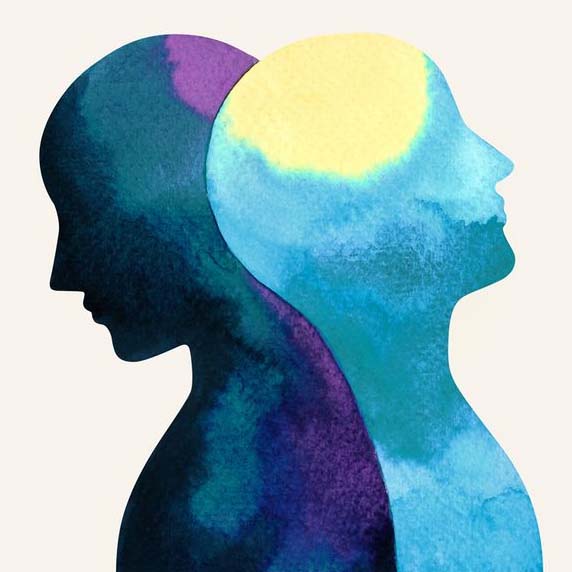
 Drugs that treat mental illness, including manic depression, are designed to relieve suffering. They allow the brain to complete its natural cycles and processes that occur when the system isn’t subverted by physical, chemical, or psychological interruptions. In Rose’s teachings, healing mental illness requires inner work. Rose provides further guidance in her books The Way of Spirit and Let That Shit Go, and practices provided on this website (Tools > Practices).
Manic depression is now called bipolar disorder, referring to the two poles of the condition. Symptoms of mania may include elevated self-esteem, decreased need for sleep, being more talkative than usual, subjective experiences in which ideas and thoughts are racing, distractibility, increase in goal-directed activity (e.g. socially, at work or school, or sexually), and involvement in activities that have a high potential for painful consequences (e.g., unrestrained buying sprees, sexual indiscretions, unwise business investments).
Depression represents the other pole of manic depression, bringing reduced energy and activity, diminished motivation and pleasure, difficulty concentrating, and feelings that may range from emptiness to hopelessness.
Put aside stimulation for substance, and wants for desires
The path to a healthy adulthood involves moving beyond pursuits that provide stimulation but do not bring genuine fulfillment. People may reject common-sense advice in order to pursue what they want but don’t really desire. Desires are the natural impulses that come from your greater Self that hold the potential for your greatest fulfillment and the healthiest expression of your selfhood.
One way to understand manic depression is as the expression of what is coming up from deep within oneself without yet knowing how to process or direct it in ways that bring fulfillment. The energy and impulses are real, but the understanding and habits needed to guide them may not yet be developed.
Manic behavior is often rewarded
This can make manic behavior particularly difficult to recognize. Excitability, relentless activity, attention-seeking, and the pursuit of stimulation may not appear unhealthy at all. Some of these behaviors are actively rewarded in your world. Yet they can represent an incomplete connection with one’s greater Self—energy and impulse without the direction, habits, discernment, or compassion for self and others needed to guide them.
This pattern is widespread. It can be seen in social systems that protect or reward people who act out toward others, in attention-seeking behaviors amplified through platforms such as TikTok, and in the constant encouragement to consume more products and experiences. In each case, wants may be satisfied while needs and desires remain unmet.
The problem is not wanting things or enjoying stimulation. It is mistaking stimulation, attention, acquisition, or excitement for the deeper experiences one actually desires.
Depression follows when needs and desires remain unmet
The depression that follows the mania is understandable. You’ve spent your energy and impulses pursuing stimulation and wants that are not worthy of you, without making meaningful progress toward the deeper experiences you actually desire. You may tell yourself that perhaps you weren’t meant to have those things, that you don’t really want them, or that the temporary high of mania should be enough. But why, then, are you depressed?
Perhaps you fear you’re not deserving of what you truly desire, or that you’re not capable of achieving it. But you are. What you don’t yet have are the habits and guidance of your greater Self needed to help you move toward it. Fear creates inaction, which keeps the life you desire at a distance.
The manic-depressive cycle can therefore be understood as a call toward spiritual beliefs and practices that help direct your energy toward the everyday, love-filled experiences you genuinely desire. And the way to move through depression is to act—taking even small steps toward those desires.
Everyday practices that can help
- Support physical well-being through healthy eating, adequate hydration, appropriate medications, sufficient rest and exercise, and reduction or avoidance of addictive stimulants and depressants such as caffeine and alcohol.
- Support mental well-being by taking responsibility for one’s own happiness. Unhappy thoughts—such as blaming others or circumstances—are means to identify and address limiting beliefs that prevent happiness (see the Address Your Beliefs (IDEA) practice). Even addiction can be reduced or overcome by replacing unnecessary wants with genuine desires and taking meaningful steps toward achieving them.
- Support spiritual well-being through meditative practices, such as recognizing I am here and I am breathing. This allows the state in which one can receive the guidance of one’s greater Self—the Self that loves, guides, heals, and protects—allowing meaningful change to emerge. Your greater Self knows your deepest desires and the divine gifts you are here to express through fun and service. For many, a happy life is found simply in caring for oneself, one’s home, and loved ones while expressing those gifts in everyday ways.
The path is purposeful—so you can work towards greater consciousness
This is why you’ve chosen to be alive this time. In other lifetimes, you pursue experiences that provide full access to physical and spiritual guides. Now, you don’t have those guides clearly defined, and the world is embraced in a terrible conflict of thoughts and ideas that don’t suit you. This is for your purposes as souls in process. The future requires the evolutionary shift in consciousness now in process to be expressed through the consciousness you’re working towards now.
Realize that anyone with these sorts of mental issues can change and enjoy lives filled with the goodness, beauty, and grace you so desperately want to see in the world. Do this by focusing on what is worthy of you: not empty wants, but the desires you need to be fully alive—love, friendship, purposeful work, and service to others in ways you find fun. So do so.